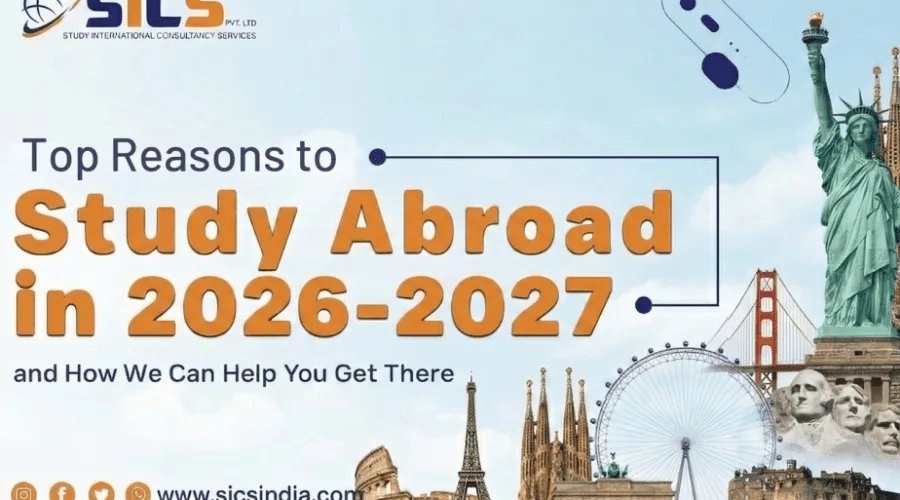
The World Has Changed. So Should the Reasons You Study Abroad
A decade ago, 'study abroad' was mostly about prestige. In 2026, it's about survival in an AI-compressed job market where employers value adaptability and global exposure more than a single credential.
1. Future-Proofing Against Automation
Global universities are restructuring curricula faster than most Indian institutions to fold in AI literacy, applied data skills and interdisciplinary electives — giving graduates a head start on roles that don't fully exist yet.
2. Employability Through Global Exposure
Recruiters increasingly filter for candidates who've operated in multicultural teams, handled ambiguity across time zones, and communicated across accents and norms — skills that are near-impossible to fake on a resume.
3. Research & Innovation Ecosystems
- Access to labs, funding and faculty at the edge of their fields
- Internship pipelines directly into global companies
- Startup incubators embedded within top campuses
4. Career Resilience, Not Just a Degree
Career resilience means being employable across multiple industries and geographies. A globally-recognised degree combined with post-study work rights builds in that redundancy — if one market slows, you have options in another.
"In an AI-driven economy, adaptability is the actual degree. The diploma is just the receipt."
5. Stronger ROI Than Ever Before
With scholarships, collateral-free education loans and multiple post-study work pathways now widely available, the effective cost-to-return ratio of studying abroad has improved significantly compared to a decade ago.
What to Watch in 2026–2027
- Shifting visa policies in the UK, Canada and Australia
- Rising demand for AI, data and clean-energy programs
- Growing scholarship pools funded by university-industry partnerships
Closing Thought
The question in 2026 isn't 'should I study abroad?' — it's 'which combination of country, course and timing gives me the most resilient career for the next 20 years?'
Ready to take the next step?
Talk to a SICS counsellor and turn this guide into a personal action plan.